Walsh Protocol assessment software for mood, behavior, and functional mental health cases
WalshDoc helps clinicians manage Walsh Protocol-style assessments from intake to report. The platform organizes symptom questionnaires, scores biotype and toxic burden patterns, connects commonly used lab categories, and prepares editable reports for clinician review.
A practical system for clinicians using biochemical, nutrient-based, and lab-guided assessment methods.
WHY WALSHDOC EXISTS
The Walsh Protocol is powerful, but difficult to deliver manually
The Walsh Protocol gives clinicians a biochemical framework for evaluating complex mood, behavior, cognition, sleep, anxiety, irritability, attention, sensory sensitivity, fatigue, and related functional health patterns. Instead of relying only on diagnosis labels, the clinician looks for recurring biochemical patterns such as methylation imbalance, copper/zinc imbalance, pyroluria, toxic burden, oxidative stress, and related lab findings.
That kind of assessment can be clinically useful, but it is difficult to manage at scale. Clinicians must collect detailed history, organize symptoms, score patterns, review labs, write impressions, prepare supplement plans, and follow progress over time.
WalshDoc was built to organize that process into a repeatable clinical workflow.
WHO BENEFITS
Clinics most likely to benefit
WalshDoc is especially useful for clinics that routinely see complex mood, behavior, fatigue, cognitive, and functional health cases that benefit from questionnaire scoring, lab interpretation, and structured reporting.
Functional Medicine Practices
For clinics already using labs, nutrition, supplements, and functional health assessments.
Mental Health Clinics
For clinicians seeing depression, anxiety, attention issues, irritability, insomnia, and medication-sensitive patients.
Autism ADHD Practices
For practices needing structured intake, parent-friendly reports, nutrient-pattern review, and follow-up tracking.
Addiction Recovery Centers
For programs interested in mood stability, stress tolerance, sleep, nutrient status, and relapse-supportive functional assessment.
Hormone and Detox Clinics
For clinics seeing fatigue, sleep disruption, mood symptoms, sensitivities, toxic burden, and metabolic stress.
LAB ORGANIZATION
Lab categories WalshDoc can help organize
WalshDoc can help organize commonly used Walsh Protocol-related lab categories and connect them to questionnaire patterns, report impressions, supplement planning, and follow-up tracking. These tests can help clinicians evaluate biochemical patterns that highly correlate to mood, behavior, cognition, sleep, fatigue, stress tolerance, and functional mental health presentations.
THE WALSHDOC WORKFLOW
A practical system for Walsh Protocol assessment
WalshDoc follows the assessment from questionnaire intake through biotype scoring, toxic burden review, lab interpretation, and clinician-edited report generation. Each section is organized so the clinician can understand how the conclusion was reached, revise the language, and explain the findings more clearly to the patient.
WORKFLOW STEP - WALSHDOC INTAKE
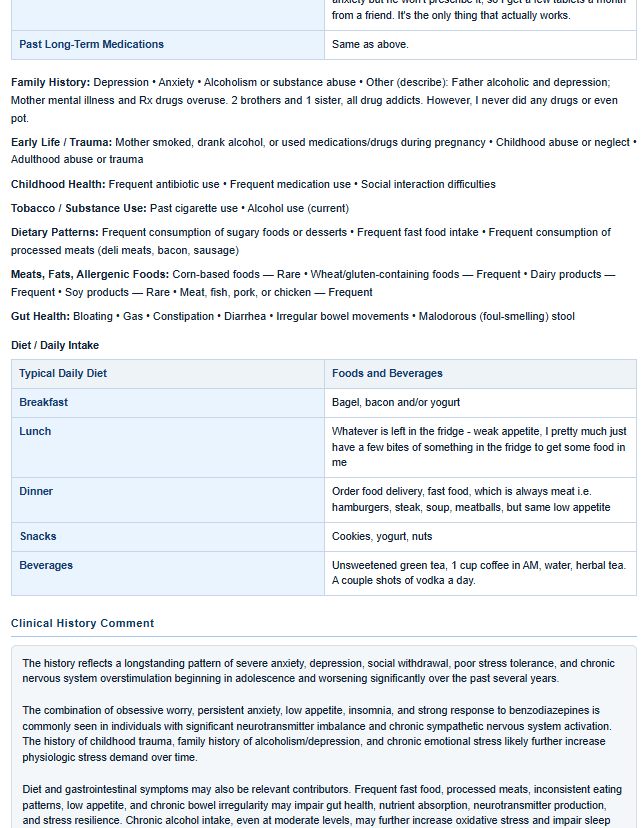
Structured intake captures the clinical story
WalshDoc reduces repetitive intake review, scoring, formatting, and report-writing work. The clinician still controls the interpretation, but the platform organizes the information and prepares draft language so reports can be completed faster.

WORKFLOW STEP - BIOTYPE REVIEW
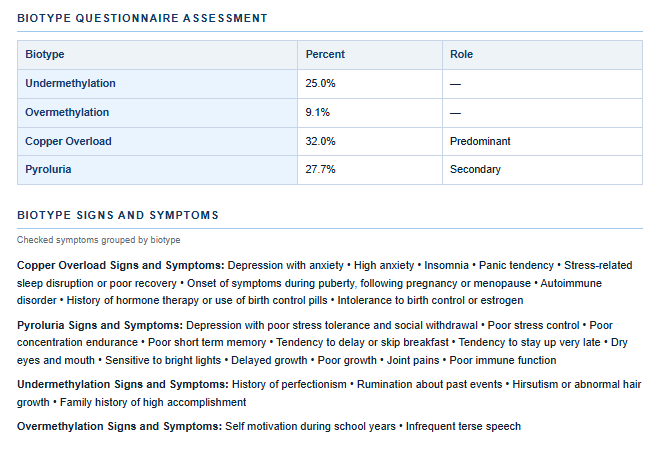
Questionnaire responses are scored by Walsh biotype
WalshDoc groups questionnaire responses into biotype categories such as undermethylation, overmethylation, copper overload, and pyroluria. The scoring is not meant to replace clinical judgment. It gives the clinician a structured way to see which symptom clusters are strongest, which are secondary, and which require lab confirmation.
WORKFLOW STEP - TOXIC BURDEN REVIEW
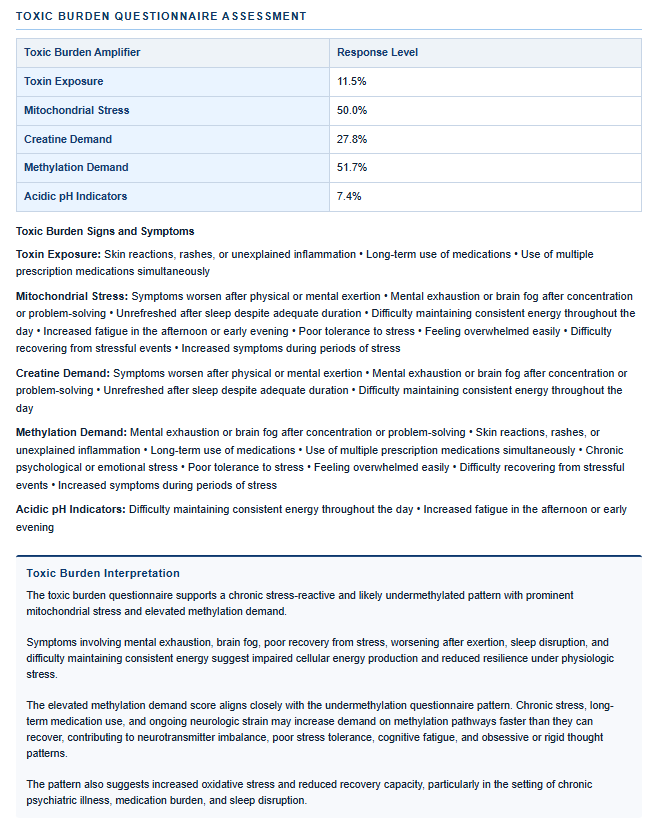
Toxic burden expands the fifth biotype
Toxic burden is not treated as one vague category. WalshDoc separates the responses into domains such as toxin exposure, mitochondrial stress, creatine demand, methylation demand, and acidic pH indicators. This helps the clinician see whether the pattern is driven by exposure history, poor recovery, metabolic strain, methylation burden, or overlapping functional stressors.
WORKFLOW STEP - LAB-GUIDED REVIEW
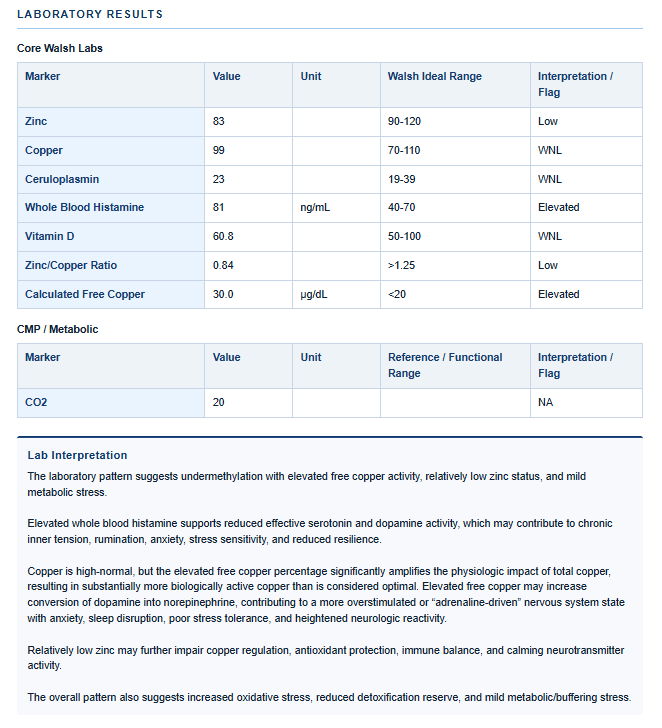
Labs confirm or challenge the questionnaire pattern
Lab values are reviewed beside the questionnaire impression so the clinician can compare symptoms with markers such as zinc, copper, ceruloplasmin, whole blood histamine, homocysteine, vitamin D, methylation markers, pyrrole testing, and other relevant findings. This supports a more organized review instead of keeping symptoms and labs in separate documents.
WORKFLOW STEP - CLINICIAN REPORT
Clinician reports tell the story clearly
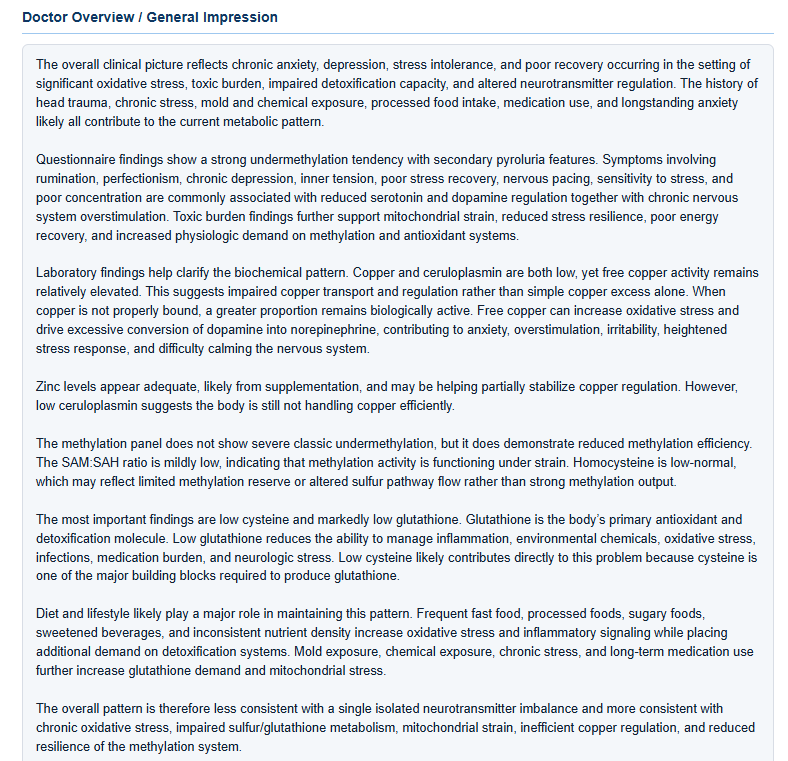
WalshDoc report helps establish nutrient status in mental health and prepares organized report sections such as questionnaire impressions, lab impressions, doctor overview, supplement planning, and follow-up recommendations. The clinician can edit the language, add judgment, modify conclusions, and finalize the report before it is shared.
WORKFLOW STEP - SUPPLEMENT PLAN + FOLLOW-UP
Supplement planning and follow-up stay connected
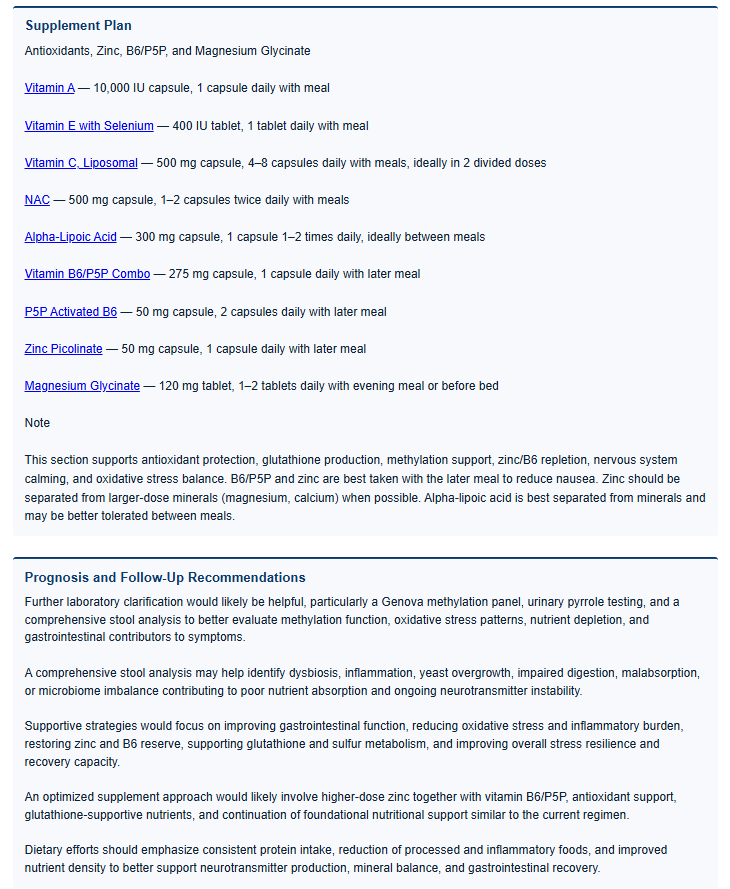
After the clinician reviews the intake, biotype scoring, toxic burden patterns, and lab findings, WalshDoc can help organize the next stage of care. Supplement recommendations can be structured by clinical priority, nutrient category, dose, timing, tolerance notes, and retesting needs, while follow-up questionnaires track symptom changes over time.
The clinician remains responsible for final recommendations. WalshDoc provides the structure so supplement planning, patient progress, and follow-up reporting stay connected to the original assessment.
Add a structured Walsh Protocol assessment service to your practice
Use WalshDoc to organize complex intake, labs, clinician interpretation, reports, supplement planning, and follow-up tracking into a repeatable assessment workflow that can support paid consultations, lab review visits, and ongoing care.